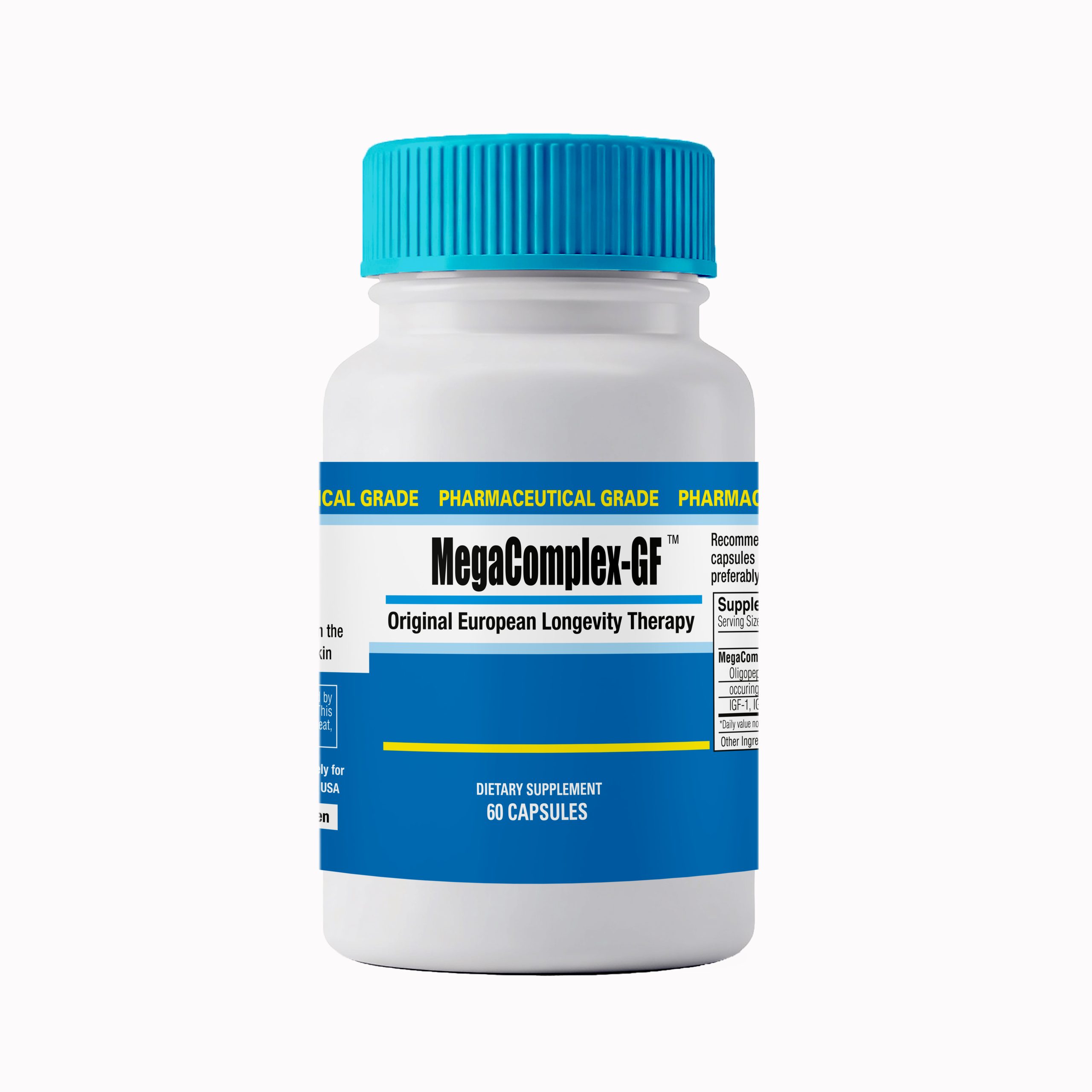
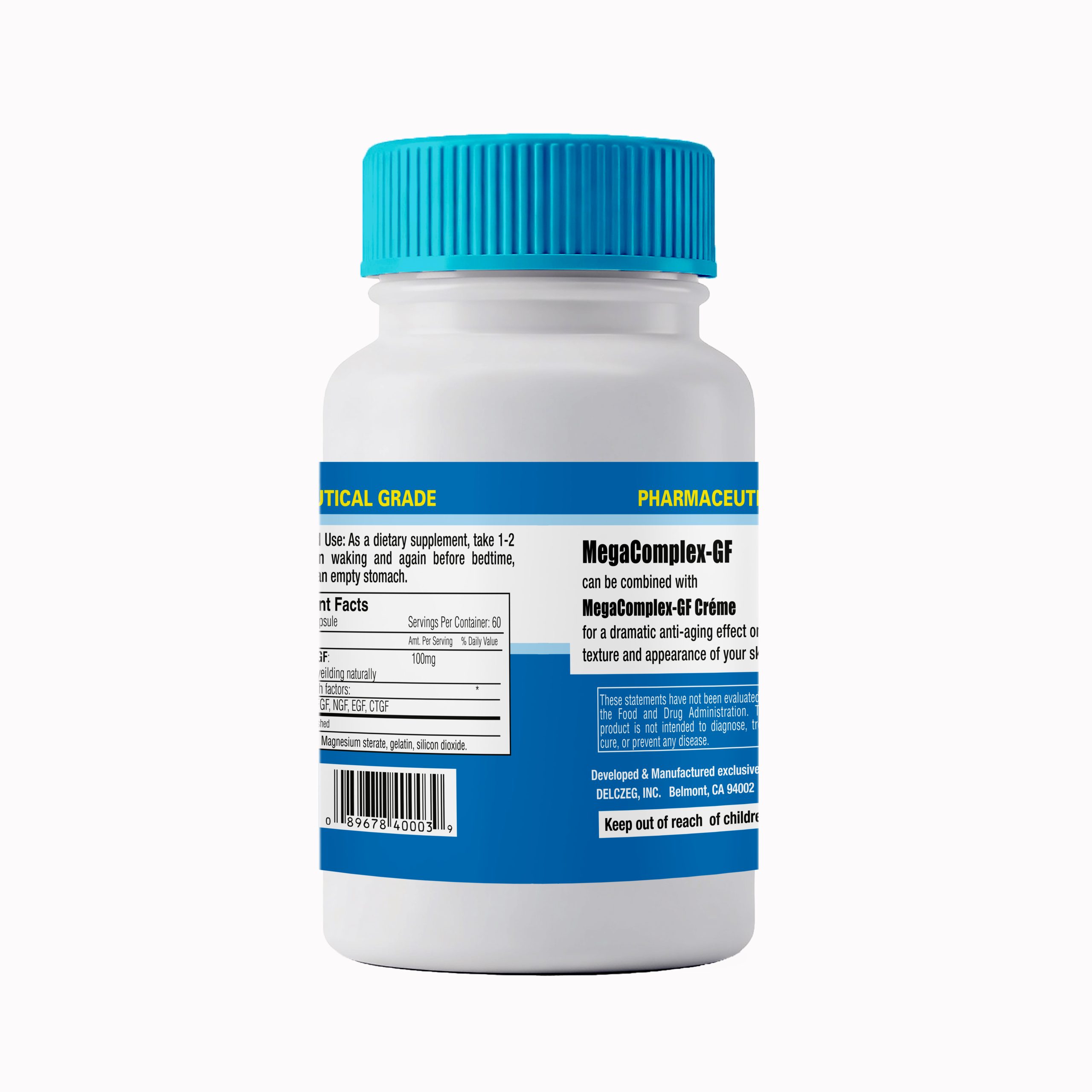
As the first nootropic supplement released to the public in 1993, our NGF (Nerve Growth Factor) oligopeptide stands alone.
Engineered to directly support the mind and body, it delivers the memory recovery and focused clarity you need to stay healthy. This world-class, patented formula has been trusted for decades to help people manage concerns related to Dementia, Alzheimer’s, and Parkinson’s.
Choose the pioneering science that leads to positive, better health and renewed confidence.
Product Information Active Ingredients
Naturally occurring Fibroblast Growth Factors Peptides Extracted from Partial Incubated Fertilized Chicken Eggs.
1. Nerve Growth Factor (NGF) is the original and most well-studied member of the neurotrophic factor family, which are proteins that promote the survival, growth, and differentiation of neurons. In essence, all neurotrophic factors are a group of proteins that supports nerve cells, and NGF is the foundational member of this group, is crucial for neuron survival and function.
Role in Neuron Development:
- NGF promotes the differentiation of neural precursor cells into mature neurons.
- It is essential for the survival of sympathetic and sensory neurons during development.
Mechanism of Action:
- NGF binds to the TrkA receptor on neurons, activating signaling pathways that promote cell survival and growth.
- It also influences gene expression related to neuronal health.
https://pmc.ncbi.nlm.nih.gov/articles/PMC8459906/
2. FGF-2 (Fibroblast Growth Factor 2) shows promise for dementia patients. Research indicates that FGF-2 may play a role in neuroprotection and neurogenesis, potentially benefiting those with dementia by promoting brain health and cognitive function.
Mechanism of Action:
- FGF-2 is involved in neuronal survival and growth.
- It may enhance synaptic plasticity, which is crucial for learning and memory.
https://pmc.ncbi.nlm.nih.gov/articles/PMC4109802/
3. FGF-21 (Fibroblast growth factor 21) is considered a neurotrophic factor because it protects neurons and promotes their survival by increasing the production of other neurotrophic factors like BDNF and NGF in astrocytes, which then helps to protect neurons. While FGF-21 is primarily known for its metabolic functions, research shows it has significant neurotrophic and neuroprotective effects in the brain.
https://pmc.ncbi.nlm.nih.gov/articles/PMC6307793/
4. AG (2-Arachidonoylglycerol) is a significant endocannabinoid that may have therapeutic potential for dementia patients.
Role in the Brain
- 2-AG is involved in various neuroprotective processes, including reducing inflammation and promoting neuronal survival.
- It interacts with cannabinoid receptors, which can influence cognitive functions and mood.
Potential Benefits for Dementia
- Research suggests that 2-AG may help alleviate symptoms associated with neurodegenerative diseases like Alzheimer’s.
- It may enhance synaptic plasticity, which is crucial for memory and learning.
https://pmc.ncbi.nlm.nih.gov/articles/PMC10123871/
5. AEA (anandamide, or N-arachidonoylethanolamide) is a type of neurotransmitter and the first discovered endocannabinoid. It functions by binding to the same cannabinoid receptors that THC (the psychoactive compound in cannabis) affects, which is why it`s also known as the joy molecule.
https://pmc.ncbi.nlm.nih.gov/articles/PMC6460372/
6. Creatine. Studies have shown that creatine supplementation can improve cognitive performance, including memory, attention, and processing speed. This may be due to the increasing energy availability in the brain.
https://pmc.ncbi.nlm.nih.gov/articles/PMC10594571/